
BONDAGE TO SIN
1. Core Meaning
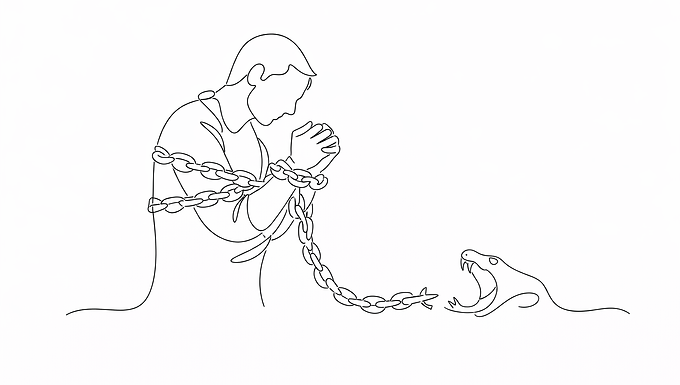
Bondage to sin refers to the spiritual condition in which human beings, apart from Christ, are enslaved to sinful desires, unable to free themselves, and incapable of living in righteousness by their own strength.
It means:
• Sin is not just an action, but a power
• Humanity is spiritually enslaved apart from grace
• The will is bent toward self and rebellion
• People cannot liberate themselves
• Only Christ can break sin’s dominion
Bondage to sin is the human condition before salvation—captivity of the heart, mind, and will.
2. Biblical Foundations
John 8:34
“Everyone who sins is a slave to sin.”
Romans 6:16–20
“You were slaves to sin…” (Summary: Apart from Christ, sin rules the human will.)
Romans 7:14–24
“I am sold under sin… who will deliver me?” (Summary: Human inability to overcome sin without Christ.)
Ephesians 2:1–3
“You were dead in your trespasses… following the desires of the flesh.” (Summary: Spiritual death and bondage characterize life apart from grace.)
3. Theological Meaning
A. Sin as a Power
Sin is not merely wrongdoing—it is a dominating force that enslaves.
B. Corruption of the Will
Humanity’s desires are disordered; the will is bent away from God.
C. Spiritual Death
Bondage to sin means separation from God and inability to choose righteousness.
D. Universal Condition
All people are born under sin’s dominion (Romans 3:9–12).
E. Liberation Through Christ
Only Christ’s death and resurrection break sin’s power and free the captive.
4. Voices from Christian Tradition
John Owen (1616–1683):
“The natural man is so wholly under the power of sin that he cannot will or do good until renewed by grace.”
Jonathan Edwards (1703–1758):
“Unregenerate men are slaves to sin, wholly under its dominion and unable to please God.”
John Calvin (1509–1564):
“Man is so enslaved by sin that he cannot of himself think or do anything good.”
Charles Spurgeon (1834–1892):
“You were slaves of sin… dead in trespasses, held fast by Satan’s chains.”
Martin Luther (1483–1546):
“The will is enslaved to sin until the Spirit sets it free.”
Thomas Watson (c. 1620–1686):
“Sin has us in chains; we cannot break loose without Christ’s delivering power.”
5. Practical Spiritual Significance
Humility — Recognizing human inability apart from grace.
Dependence — Freedom comes only through Christ’s power.
Repentance — Turning from sin requires the Spirit’s work.
Hope — No bondage is too strong for Christ to break.
Transformation — Freedom leads to holiness and new obedience.
6. Summary
Bondage to sin describes humanity’s enslaved condition apart from Christ—captivity of the will, corruption of desire, and spiritual death.
But Christ breaks sin’s chains, liberates the captive, and empowers believers to walk in righteousness.
In Daily Faith: Acknowledge your need for Christ’s power, rely on the Spirit, and walk in the freedom He provides.
In Daily Life: Living Free From the Bondage of Sin
Freedom from sin is not merely a doctrine—it is a lived reality empowered by the Spirit.
Believers learn to walk in the liberty Christ has secured.
1. In Your Heart — Recognizing Sin’s Power and Christ’s Freedom
Freedom begins with honesty about bondage.
• John 8:36 (Summary: If the Son sets you free, you are truly free.)
Daily Practice:
Confess areas where sin still exerts influence; ask Christ for freedom.
Why It Matters:
Acknowledging bondage is the first step toward liberation.
Encouragement:
Christ delights to free those who come to Him.
2. In Your Thoughts — Renewing the Mind Against Sin’s Lies
Bondage often begins in the mind.
• Romans 12:2 (Summary: Be transformed by renewing your mind.)
Daily Practice:
Replace sinful thoughts with Scripture; meditate on truth.
Why It Matters:
Sin loses power when its lies are exposed.
Encouragement:
The Spirit renews your thinking day by day.
3. In Your Speech — Confessing Truth Instead of Sin’s Accusations
Words shape spiritual freedom.
• Romans 10:10 (Summary: Confession flows from faith.)
Daily Practice:
Speak truth over your life: “I am free in Christ.”
Why It Matters:
Confession strengthens conviction and weakens shame.
Encouragement:
God honours every word that aligns with His truth.
4. In Your Relationships — Breaking Patterns of Sin Through Community
Bondage thrives in isolation; freedom grows in fellowship.
• Galatians 6:2 (Summary: Bear one another’s burdens.)
Daily Practice:
Seek accountability; confess struggles to trusted believers.
Why It Matters:
Community exposes sin and strengthens obedience.
Encouragement:
God uses others to help break chains.
5. In Your Work — Serving God Instead of Sin
Bondage to sin distorts work; freedom restores purpose.
• Colossians 3:23 (Summary: Work wholeheartedly for the Lord.)
Daily Practice:
Offer your work to God; reject sinful motives like pride or greed.
Why It Matters:
Work becomes worship when freed from sin’s influence.
Encouragement:
Christ empowers you to work with integrity.
6. In Your Community — Resisting Sin Through the Spirit’s Power
Freedom is lived out in daily choices.
• Romans 8:13 (Summary: By the Spirit we put sin to death.)
Daily Practice:
Ask the Spirit for strength to resist temptation.
Why It Matters:
Victory over sin is Spirit‑empowered, not self‑powered.
Encouragement:
The Spirit is stronger than any sinful habit.
7. In Your Habits — Forming Rhythms That Break Sin’s Grip
Habits either reinforce bondage or cultivate freedom.
• Psalm 119:11 (Summary: Hiding God’s Word in the heart guards against sin.)
Daily Practice:
Build rhythms of prayer, Scripture, fasting, and worship.
Why It Matters:
Holy habits weaken sinful patterns.
Encouragement:
God meets you in every faithful discipline.
8. In Your Suffering — Trusting Christ When Sin Feels Strong
Trials can intensify temptation, but Christ sustains.
• 1 Corinthians 10:13 (Summary: God provides a way of escape in temptation.)
Daily Practice:
Cry out to God in moments of weakness; cling to His promises.
Why It Matters:
Suffering becomes a place of deeper dependence.
Encouragement:
Christ is present even when the battle feels overwhelming.
9. In Your Future — Walking in the Hope of Complete Freedom
Bondage to sin will one day be fully destroyed.
• Philippians 1:6 (Summary: God will complete the work He began.)
Daily Practice:
Live with hope—your freedom will be perfected in glory.
Why It Matters:
Hope fuels perseverance.
Encouragement:
Christ will finish the liberation He began in you.