
ALTAR
Definition
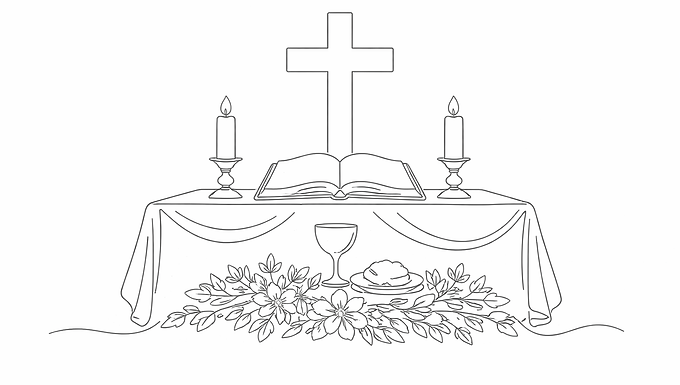
An altar is a sacred place of offering, sacrifice, prayer, and encounter with God.
In Scripture and Christian tradition, it represents the meeting point between God and humanity — the place where worship is offered, sin is confronted, covenant is affirmed, and the presence of God is honoured.
In both Old and New Testament imagery, the altar is a symbol of surrender, sacrifice, atonement, and communion with the Holy One.
1. Biblical Foundation
A. Old Testament Altars
From the earliest pages of Scripture, God’s people build altars:
• Noah builds an altar after the flood (Gen. 8:20).
• Abraham builds altars at every major moment of obedience (Gen. 12:7–8).
• Isaac and Jacob continue this pattern (Gen. 26:25; 35:7).
• Moses builds an altar to seal the covenant (Ex. 24:4–8).
• The Tabernacle and later the Temple feature the great bronze altar for sacrifices and offerings.
The altar is the central place of Israel’s worship—the site where atonement is made and where the people encounter the presence of God.
B. New Testament Altars
In the New Testament, the altar shifts from a physical structure to a Christ-centred reality.
• Hebrews 13:10 speaks of the Christian’s altar as Christ Himself.
• Revelation shows the heavenly altar where prayers of the saints rise like incense (Rev. 8:3–4).
• Jesus references the altar as a place of reconciliation (Matt. 5:23–24).
The altar becomes a symbol of Jesus’ ultimate sacrifice and the believer’s offering of their life to God.
2. Theological Meaning
A. A Place of Sacrifice
Traditionally, an altar is where something of value is offered up to God.
In Christianity, the ultimate sacrifice is Christ:
“Behold, the Lamb of God.” — John 1:29
Thus, every Christian altar points to the cross.
B. A Place of Presence
The altar represents the space where God meets His people.
In liturgical traditions, it is the centre of the Eucharist.
C. A Place of Surrender
To “come to the altar” means to:
• confess sin
• seek prayer
• surrender burdens
• commit or recommit to God
• receive grace
D. A Place of Prayer
The altar is where prayers rise like incense.
E. A Place of Remembrance
Altars commemorate God’s acts of salvation, mercy, and power.
3. Symbolism of the Christian Altar
The altar symbolizes:
• The Cross
• The Lord’s Table
• God’s Presence
• A New Covenant
• Surrender
• Remembrance
It is a place where God’s grace is encountered and His holiness revered.
4. The Altar in Christian Worship
Depending on tradition, the altar may be:
A. Eucharistic Table — for Communion
B. Prayer Altar — for repentance and ministry
C. Symbolic Altar — altar call
D. Heavenly Altar — Revelation’s imagery
5. Short Definition
ALTAR:
A sacred place where God is worshipped, sacrifice is remembered, prayer is offered, and the presence of Christ is encountered — ultimately pointing to Christ’s once-for-all sacrifice on the cross and the believer’s offering of their whole life to God.
In Daily Faith: Approach God with reverence, offering worship, obedience, and devotion.
In Daily Faith: Living with the Altar in Your Life
The altar is more than a physical place—it is a spiritual posture.
Christians are called to bring the principles of the altar into daily life: surrender, sacrifice, worship, prayer, and remembrance of God’s work.
1. Offer Yourself as a Living Sacrifice
The altar calls us to give God what is valuable—our hearts, time, gifts, and obedience.
Practical Application
• Begin each day by consciously offering your actions, work, and choices to God.
• Identify areas of your life where surrender is needed and commit them to Him.
Biblical Guidance
• Romans 12:1
• 1 Corinthians 10:31
Surrendering daily transforms ordinary life into ongoing worship.
Why It Matters
Offering yourself to God aligns your entire life with His will.
It turns every moment into worship and keeps your heart centred on Christ.
Encouragement
God delights in your offering — even when it feels small.
He receives it with joy.
2. Confess and Seek Forgiveness
The altar is a place of repentance and reconciliation.
Practical Application
• Examine your conscience regularly.
• Confess specific sins.
• Seek reconciliation where needed.
Biblical Guidance
• Matthew 5:23–24
• 1 John 1:9
Daily confession keeps the heart pure and relationships restored.
Why It Matters
Confession breaks the power of hidden sin and restores intimacy with God and others.
Encouragement
God never withholds forgiveness from a repentant heart — His mercy is new every morning.
3. Pray Continuously
Altars are places where prayers rise to God.
Practical Application
• Dedicate daily times of prayer.
• Turn ordinary moments into mini-altars.
• Pray for family, church, and world.
Biblical Guidance
• Psalm 141:2
• 1 Thessalonians 5:17
Prayer connects daily life to God’s presence.
Why It Matters
Prayer keeps your heart open to God’s voice and strengthens your dependence on Him.
Encouragement
Every prayer — whispered, spoken, or silent — is heard by God.
4. Remember God’s Faithfulness
Altars commemorate God’s acts of salvation and provision.
Practical Application
• Keep a gratitude journal.
• Share testimonies.
• Celebrate milestones of God’s intervention.
Biblical Guidance
• Psalm 105:5
• Luke 22:19
Remembering God’s goodness strengthens faith.
Why It Matters
Looking back at God’s faithfulness fuels hope for the future.
Encouragement
God has carried you before — He will carry you again.
5. Live in Holiness and Obedience
The altar symbolizes God’s holiness.
Practical Application
• Set spiritual boundaries.
• Practice integrity and love.
• Serve others as offerings to God.
Biblical Guidance
• 1 Peter 1:16
• Romans 12:2
Living with integrity honours God.
Why It Matters
Holiness reflects God’s character and keeps your life aligned with His purposes.
Encouragement
God empowers you to live holy — His Spirit strengthens every step.
6. Cultivate Sacrificial Generosity
The altar teaches that offerings involve giving what is precious.
Practical Application
• Give time, talents, and resources.
• Serve the marginalized.
• Support church and mission work.
Biblical Guidance
• Proverbs 3:9
• 2 Corinthians 9:7
Generosity becomes worship.
Why It Matters
Generosity breaks selfishness and mirrors the heart of God.
Encouragement
God multiplies every gift given in love — nothing offered to Him is wasted.
7. Approach Life as a Spiritual Altar
Every day can become an altar experience.
Practical Application
• Begin with prayer and Scripture.
• Offer joys and struggles to God.
• End the day in reflection and thanksgiving.
Biblical Guidance
• 1 Corinthians 10:31
• 2 Corinthians 4:10
Daily life becomes sacred when lived in the posture of the altar.
Why It Matters
Seeing life as an altar transforms ordinary routines into holy encounters with God.
Encouragement
God meets you in the everyday — your whole life can become a place of worship.
Summary of Daily Application
The altar in everyday faith calls Christians to:
Offer their whole lives to God
Confess sin and seek reconciliation
Pray continually
Remember God’s faithfulness
Live in holiness
Give generously
Approach daily life as a spiritual altar
Scripture References
• Romans 12:1
• Matthew 5:23–24
• 1 John 1:9
• Psalm 141:2
• Luke 22:19
• Proverbs 3:9
• 1 Peter 1:16