
Joshua
Author
The Book of Joshua is traditionally attributed to Joshua, Moses’ successor and the leader who guided Israel into the Promised Land.
Mini Biography of Joshua
Joshua, son of Nun, was Moses’ assistant and one of the twelve spies sent into Canaan.
Along with Caleb, he trusted God’s promise despite opposition.
After Moses’ death, God appointed Joshua to lead Israel, conquer the land, and distribute it among the tribes.
Joshua is remembered as a courageous, obedient, Spirit‑empowered servant of God whose leadership helped Israel transition from wandering to inheritance.
Intended Audience
Joshua was written for the Israelites, especially the generation entering and settling in the Promised Land.
It recorded God’s faithfulness, instructed them in obedience, and guided them in claiming the land according to God’s covenant promises.
Purpose of the Book
Joshua exists to:
record Israel’s conquest and settlement of Canaan
demonstrate God’s faithfulness to His promises to Abraham, Isaac, and Jacob
teach obedience, courage, and reliance on God
provide instruction for living in the land, including tribal boundaries and covenant renewal
serve as a historical and theological record for future generations
Date and Language
Likely written during the late 15th–13th century BC, shortly after the conquest
Originally written in Biblical Hebrew
Style / Category of Writing
Joshua blends:
history
narrative
theology
speeches and covenant instruction
It includes battles, miracles, genealogies, land allotments, and moral lessons.
What Is Special About Joshua
Joshua:
chronicles the fulfilment of God’s promises
highlights God’s guidance and miraculous intervention
emphasises covenant renewal and obedience
shows how God works through faithful leadership and united community
demonstrates that victory comes from God, not human strength
Interesting Facts
Joshua means “The Lord is Salvation.”
The book opens with God’s command: “Be strong and courageous.”
Includes the miraculous fall of Jericho and the sun standing still.
Ends with covenant renewal at Shechem.
Shows a repeated pattern: God guides → Israel obeys → God blesses.
Why Joshua Should Be Valued
Joshua:
demonstrates God’s faithfulness in fulfilling His promises
teaches courage, obedience, and trust
offers a model for facing new challenges with God
encourages covenant loyalty and moral integrity
Why Joshua Was Included in Scripture
Joshua was preserved because it:
records Israel’s conquest and settlement
teaches faith, courage, and obedience through real events
provides a record of God’s covenant faithfulness
instructs future generations in living faithfully in God’s blessings
Historical Context
Joshua reflects Israel’s transition from a nomadic wilderness community to a settled nation.
It shows God guiding His people against hostile nations and through complex challenges.
It highlights the importance of obedience, faith, and leadership for communal success.
What God Wants to Convey Through Joshua
Joshua teaches that:
God is faithful and fulfils His promises
courage, obedience, and reliance on God are essential
faithful leadership matters
God works through both divine power and human obedience
blessing and security come from covenant faithfulness
God calls His people to trust Him in new seasons and challenges
Summary of Joshua
Joshua opens with the transition of leadership from Moses to Joshua as Israel stands on the edge of the Promised Land.
God commissions Joshua to lead with strength and courage, promising His presence just as He was with Moses.
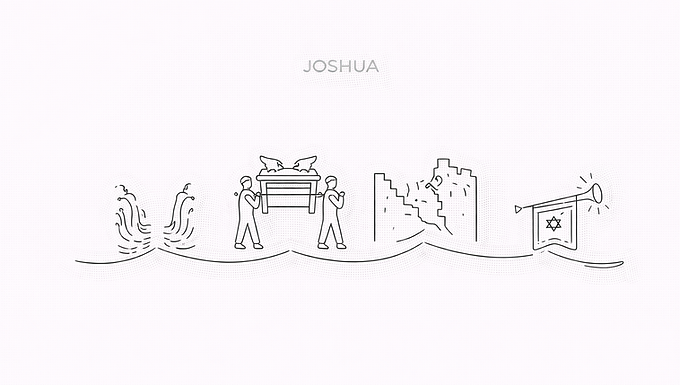
Israel crosses the Jordan River miraculously as God parts the waters, confirming Joshua’s leadership.
Early victories — especially the fall of Jericho — show that Israel’s success depends not on military power but on obedience.
The middle of the book recounts battles against Canaanite nations.
Triumphs and setbacks (such as Achan’s sin at Ai) reveal that God’s faithfulness is constant, but Israel’s obedience matters.
After the major campaigns, the land is divided among the twelve tribes, fulfilling God’s ancient promises.
Joshua then calls the people to covenant faithfulness, reminding them of God’s mighty acts and warning them against idolatry.
His final declaration — “As for me and my house, we will serve the Lord” — becomes a timeless call to loyalty.
The book ends with Israel enjoying rest in the land, having received what God promised, and being urged to remain faithful as they begin their new life as God’s people.
Ten Key Bible Verses in Joshua
Joshua 1:5 — “I will be with you; I will never leave you nor forsake you.”
Joshua 1:8 — Meditate on the Law for wisdom and success.
Joshua 1:9 — “Be strong and courageous… for the Lord your God is with you.”
Joshua 3:5 — “Consecrate yourselves; tomorrow the Lord will do wonders.”
Joshua 4:24 — Remember God’s power so all nations may know Him.
Joshua 6:16 — God gives Jericho into Israel’s hands.
Joshua 7:13 — Sin in the camp must be addressed.
Joshua 10:13 — The sun stands still as God fights for Israel.
Joshua 21:45 — “Not one of all the good promises of the Lord failed.”
Joshua 24:15 — “As for me and my house, we will serve the Lord.”
Major Themes in Joshua
God’s faithfulness — He keeps every promise.
Courage and obedience — Victory comes through trust.
God’s presence — God fights for His people.
Leadership — Joshua models faithful leadership.
Holiness and consecration — Preparation matters.
The danger of sin — Hidden sin harms the whole community.
Unity — The tribes must work together.
Inheritance and rest — God provides a secure future.
Practical Applications for Today
Trust God’s promises even when fulfilment seems slow.
Face challenges with courage, knowing God is with you.
Stay rooted in Scripture for wisdom and strength.
Deal honestly with sin; it affects more than you realise.
Step out in faith even when God’s instructions seem unusual.
Practise gratitude and remembrance.
Support godly leadership.
Value unity in the community of faith.
Prepare your heart before major decisions.
Declare your allegiance to God daily.
What We Need to Learn from Joshua for Today’s World
God still calls His people to courageous, faith‑filled living. Challenges and uncertainties remain, but God’s presence is our strength.
True victory comes through obedience. Success is measured by faithfulness, not strategy alone.
God’s promises are trustworthy. Joshua shows that God fulfils every word He speaks.
Sin must be taken seriously. Hidden compromise harms families, communities, and spiritual effectiveness.
We must choose whom we will serve. The world offers many idols — Joshua calls us to undivided loyalty.
God fights for His people.